


As the modern automotive industry evolves towards intelligence and connectivity, car owners are placing unprecedented demands on the stability and durability of in-vehicle power supply systems. Looking back at the history of automotive battery development, this core component has undergone a technological leap that liberates manpower.
This article will take you on a deep dive into the evolution of automotive batteries from early “traditional periodic water-addition maintenance” to today’s “advanced maintenance-free automotive battery technology” represented by companies like KONE. Through a comprehensive analysis of the iterations in internal grille materials, structural improvements, and safety and explosion-proof processes, we provide a practical guide to selecting in-vehicle batteries, helping car owners completely eliminate the inconvenience of starting a car with a dead battery and scientifically extend the automotive battery replacement cycle.
Evolution: The History of Automotive Battery Development
As the “heart” of a vehicle’s electrical system, the automotive battery not only handles the instantaneous discharge during engine startup but also provides stable voltage power to all electronic devices when the engine is idling or under high load. Throughout its century-long development, each breakthrough in lead-acid battery structure has precisely addressed a core pain point for car owners during use.
Early Exploration: The “Cumbersome Era” of Traditional Flooded Lead-Acid Batteries
In the mid-20th century, automobiles commonly used traditional flooded lead-acid batteries. During charging and discharging, the water in the electrolyte easily evaporates and electrolyzes, producing hydrogen and oxygen. Therefore, car owners had to periodically open the battery cover and manually add distilled or deionized water to maintain the electrolyte density.
Improper maintenance could easily lead to irreversible sulfation of the plates, causing a sharp drop in battery capacity and rendering the car unable to start. During this period, the poor adaptability to high and low temperatures and the cumbersome maintenance process became major technical bottlenecks hindering the widespread adoption of automobiles, resulting in extremely short battery life.
Structural Leap: The Birth of Calcium Alloy Technology and Early “Maintenance-Free” Batteries
To escape the constraints of frequent water additions, the battery industry introduced lead-calcium alloy technology in the 1970s. By adding trace amounts of calcium to lead, the overpotential for hydrogen and oxygen evolution was successfully increased, significantly reducing water loss during battery use. This marked the formal birth of the “maintenance-free battery” concept.
However, early maintenance-free batteries still exhibited shortcomings when faced with the increasing electronic devices in modern cars (such as dashcams and intelligent anti-theft systems) and the frequent start-stop conditions of urban driving, including short deep cycle life and easy shedding of active material from the plates.
Pinnacle of Technology: Advanced Maintenance-Free Automotive Battery Technology
Entering the 21st century, high-end battery brands like KONE have propelled maintenance-free automotive battery technology to new heights. Modern top-tier maintenance-free batteries have achieved three revolutionary changes in materials and structure:
Key Technical Breakthroughs in Modern Batteries
99.99% High-Purity Lead Automotive Batteries
Abandoning traditional recycled lead, the positive and negative electrode grilles are crafted from virgin pure lead with a purity of up to 99.99%. This utilization of high-purity lead automotive batteries results in negligible self-discharge within the battery. Even when the vehicle is parked in a garage for extended periods, the battery retains sufficient charge.
Exceptional Cold Start Current (CCA)
The geometrically optimized positive and negative electrode plates provide a cold start current (CCA) far exceeding that of batteries of similar specifications, ensuring instant ignition even in extremely cold environments down to -30°C.
Fully Sealed Labyrinth Top Cover Design
The battery top cover integrates a complex labyrinthine gas condensation and reflux path. Water vapor generated during charging condenses in the labyrinth structure and flows back into the battery, achieving true zero water loss. Combined with a polymer air filter, it provides comprehensive protection against explosions and acid mist leakage, significantly extending the automotive battery replacement cycle.
Future Trends: AGM Automatic Start-Stop Batteries and Low-Voltage Auxiliary Systems in New Energy Vehicles
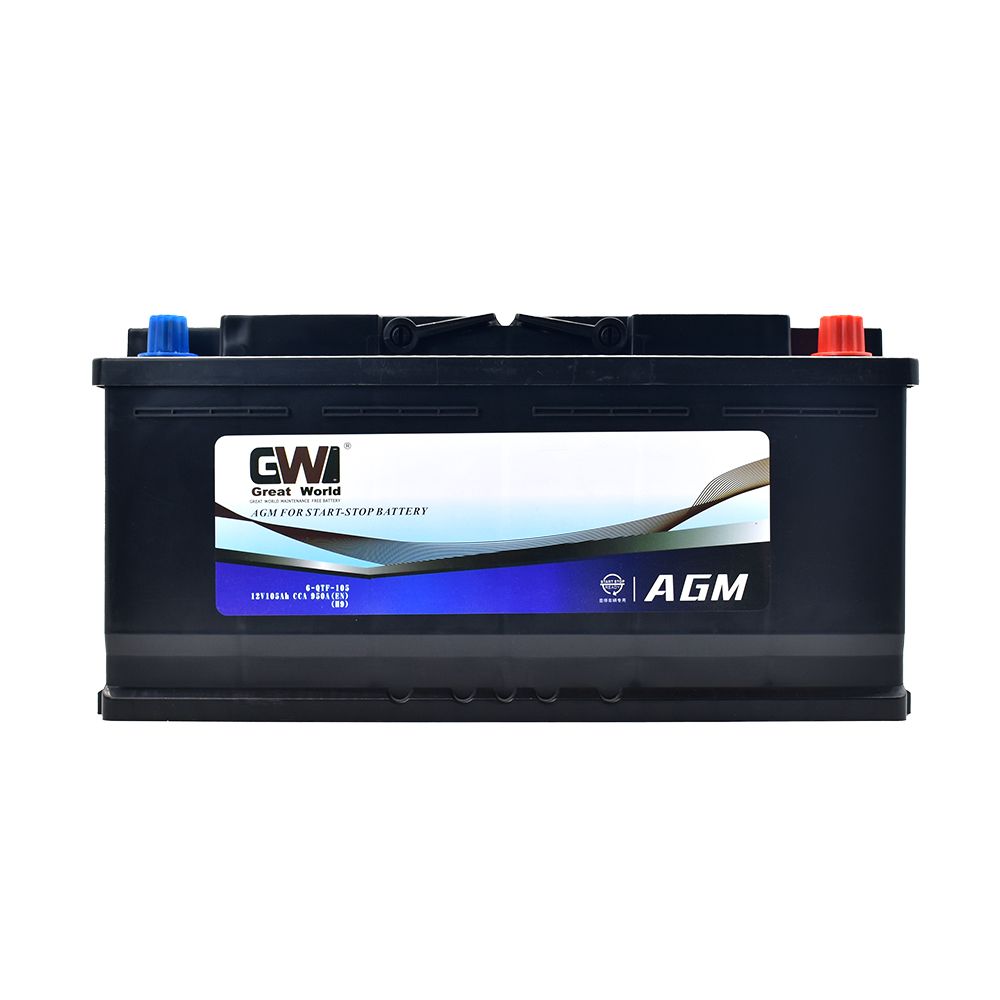
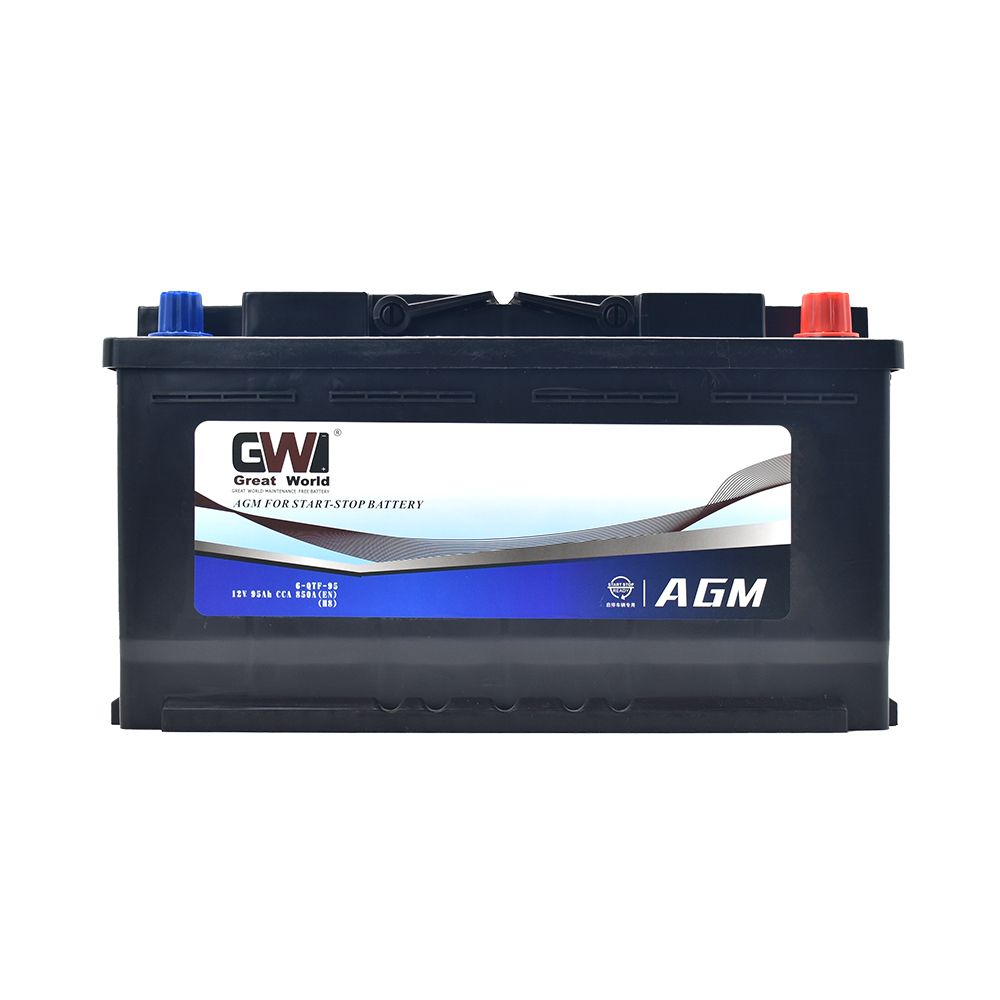
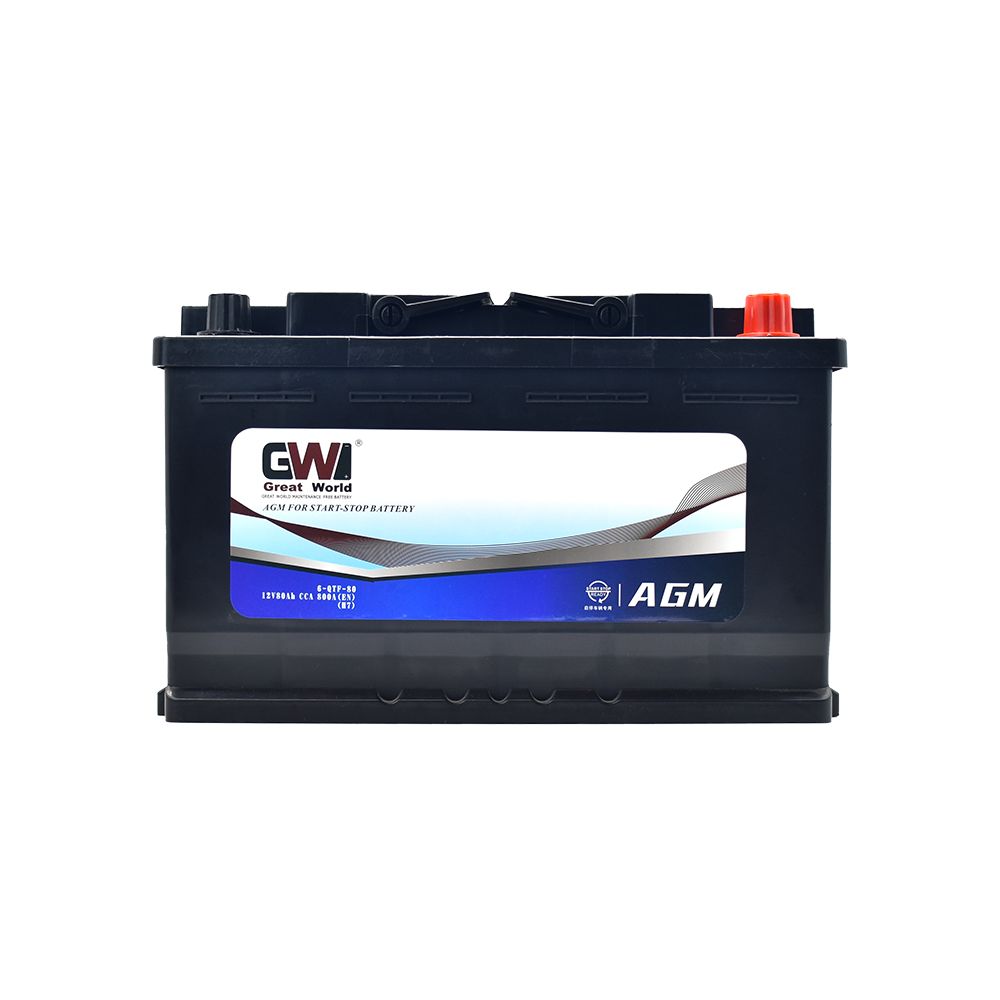
With increasingly stringent global energy conservation and emission reduction standards, vehicles equipped with automatic start-stop systems have become mainstream. Traditional maintenance-free batteries struggle to withstand the deep discharge stress caused by frequent start-stop cycles. Therefore, high-performance AGM automatic start-stop batteries have emerged.
AGM batteries utilize adsorption-type glass fiber separator technology, where the electrolyte is completely adsorbed within the separator, resulting in a cycle life three times that of ordinary batteries. Simultaneously, in pure electric and hybrid new energy vehicles, high-purity lead-acid maintenance-free batteries also serve as low-voltage auxiliary batteries, responsible for powering the vehicle’s computer control unit (ECU) and safety systems; their core role remains unshakeable.
Practical Advice for Car Owners: Car Battery Selection Guide
Faced with a dazzling array of products on the market, car owners should follow these professional suggestions when replacing their car batteries:
1. Look for technical markings: Prioritize products clearly labeled “High-purity Lead” or with advanced labyrinth seal explosion-proof patents to ensure safety and long lifespan.
2. Match vehicle configuration: Vehicles with start-stop functions must be upgraded to AGM automatic start-stop batteries. Do not use ordinary maintenance-free batteries to save money, otherwise the battery will quickly fail within a few months.
3. Pay attention to CCA parameters: Car owners in cold northern regions should pay special attention to the cold start current (CCA) value on the battery casing. The higher the value, the more reliable the low-temperature start.
Conclusion:
In conclusion, from the tedious process of periodically adding water to today’s technologically advanced, maintenance-free smart batteries, the history of automotive battery development is a history of technological evolution in the continuous pursuit of ultimate efficiency and safety. Choosing a battery like the Divini, which combines 99.99% high-purity lead technology with pioneering safety design, not only provides your car with long-lasting power but also safeguards every safe journey.
 English
  Chinese
  Russian